
Firmware development
Bare-metal and RTOS firmware for microcontroller platforms: device drivers, communication stacks, bootloaders and power management, developed against the hardware and validated on the bench.
Embedded systems engineering
We design the hardware, develop the firmware and build the tooling that puts it into production. More than ten years of it, for startups and product teams that need a proof of concept, a prototype or a low-volume run.
What we deliver
Every project ends with a complete handover package rather than a demonstration.
Why BrainIOStream
Most embedded projects fail late: at certification, in production, or in the field after launch. Those failures are usually created early, when the board and the firmware are specified by separate suppliers who never meet. We take responsibility for both.
You work directly with the engineers building your product. Requirements go to the people who implement them, with no account layer in between.
Proof of concept, prototype and low-volume production. This is our core business rather than overflow capacity from larger programmes.
Schematic, layout and firmware are developed by one team, so integration issues get resolved instead of being assigned between vendors.
Test fixtures, programming and automated test are part of the development plan from the start, not a phase that begins after design freeze.
Capabilities
Firmware, embedded Linux, hardware design, wireless, automotive systems and production tooling.
Bare-metal and RTOS firmware for microcontroller platforms: device drivers, communication stacks, bootloaders and power management, developed against the hardware and validated on the bench.
Custom Linux distributions built with Yocto and Buildroot: bootloader, device tree, kernel drivers and the userspace applications above them, delivered as a reproducible build.
Schematic design, multilayer PCB layout and hardware bring-up. Analog front ends, power stages and battery charging, specified for the process that will manufacture them.
Low-power wireless devices over BLE, ANT+, sub-GHz and proprietary 2.4 GHz links. Current consumption is measured on a profiler and verified against the battery specification.
CAN and LIN development against production vehicle equipment, retrofit electronics, and recovery of schematics and firmware from hardware supplied without documentation.
Read moreAutomated test equipment, production programmers and factory software. This is the work that determines whether unit 500 behaves identically to unit 5.
In-house product
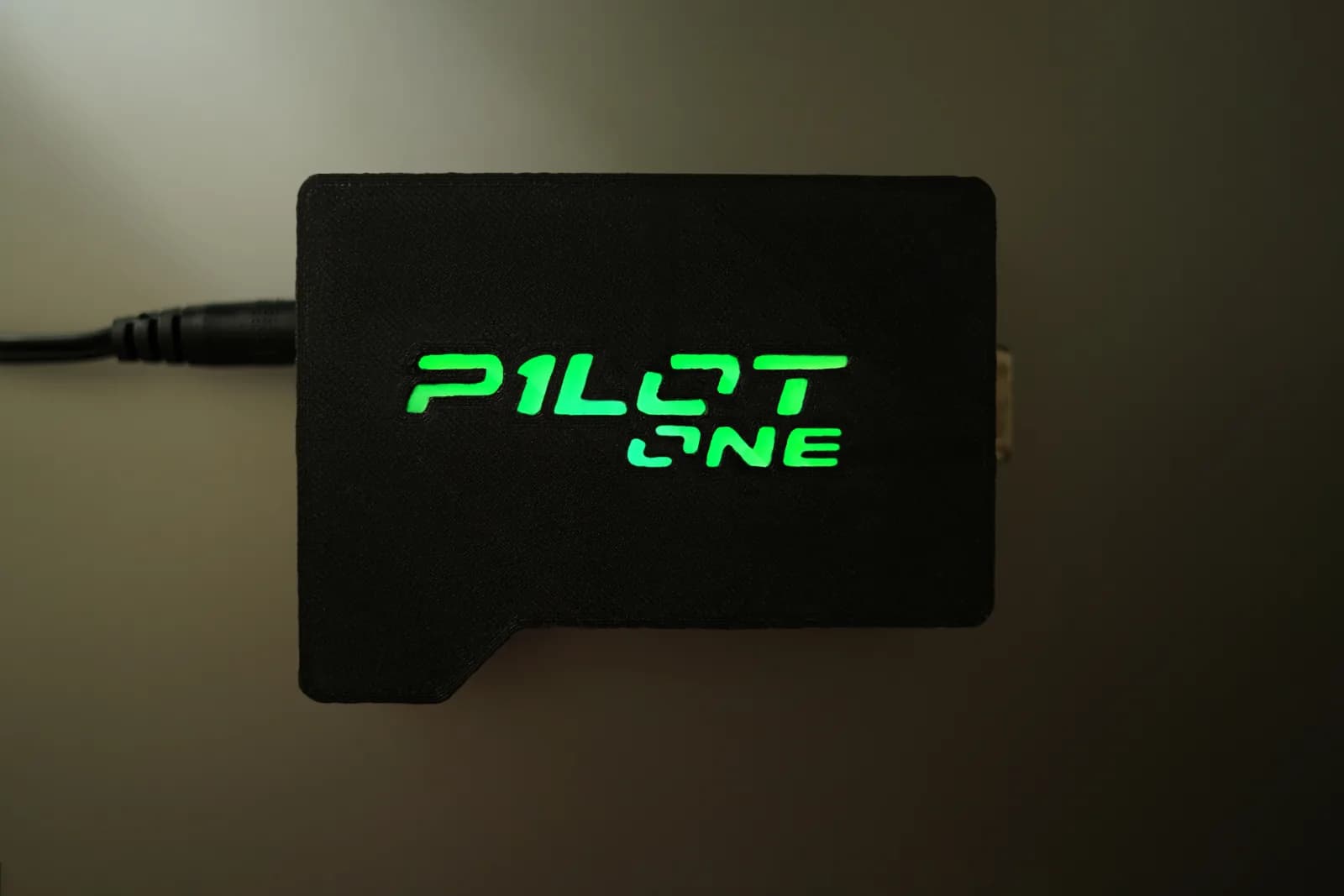
A USB interface between a PC and production automotive equipment. It drives real instrument clusters from simulator telemetry, and reads the vehicle's own switches and controls back to the PC.
Three clusters run today — BMW F30 and G30, and the Porsche Panamera 970 — alongside the F-series gear selector and the iDrive-type rotary controller.
We designed the board, developed the firmware and implemented the protocol. It is a working reference for the kind of work we deliver for clients.
Industries
The silicon and the interfaces are broadly similar across domains. The requirements, the validation and the approvals are not. These are the ones we already know.
Devices subject to audit. Firmware, update paths and production test developed to fit an existing quality management system.
CAN and LIN development against production vehicle equipment, retrofit electronics, and bench test systems.
Long-life sub-GHz devices running from a single cell, and the production tooling required to build them in volume.
Modbus, motor control, mains-borne signalling and analog instrumentation.
Connected equipment with sensor acquisition, wireless links and field updates.
Compact battery-powered devices with charging, low-power operation, pairing and mechanical constraints.
Selected work
A sample of completed work. Some projects ran under NDA, so the client is not named.
In-house product
A USB interface that drives production car instrument clusters from PC telemetry and reads the vehicle's own switches and stalks back the other way. One connector carries two CAN buses, a LIN master and the power for whatever is on the end of it. We designed the board, developed the firmware, decoded the equipment's messages and wrote the manual. On sale, with support for further equipment added by firmware update.
STM32G4742× CANLIN masterUSB CDC and HIDcustom wire protocol
A battery management board supplied with no documentation and no source. We traced the schematic back off the finished hardware, identified the parts whose markings had been removed from what they were wired to, and developed firmware that behaves like the original on the reconstructed design.
STM32G030schematic recoveryGhidracustom BMS firmware
Under NDA, via an engineering partner
The Linux application layer for commercial fitness machines: C++ services on an embedded Linux board talking to the machine's controller over CAN, and packaged as signed Debian builds so an installed fleet could be updated without a site visit.
Raspberry PiFalcon FX SDKCANC++LinuxDEB packaging
Process
Five stages, each producing something you can review. Technical risk is handled early, while changes are still inexpensive.
A technical call, followed by a written scope: deliverables, acceptance criteria, and what is explicitly excluded.
The highest-risk element is prototyped first, on development kits or a wired-up board, before hardware is committed.
Schematic, layout, firmware and tests. Progress is reported as commits, measurements and bench photographs.
Boards are brought up and instrumented. Current consumption, timing and every interface are measured and recorded.
Sources, schematics, gerbers, BOM, build scripts and test fixtures are delivered, and the build is verified on a clean machine.
Send the requirements, the constraints and the timeline. You will get a technical assessment and a proposed plan from the engineers who would deliver the project.